Here's the list of the seven accused who faced trial in the 2008 Malegaon blast case.
The Union government is considering an impeachment motion against Allahabad High Court judge Yashwant Varma, who was indicted by a Supreme Court-appointed probe panel after burnt cash was found at his residence. The government is likely to consult with opposition parties before moving forward with the motion, which would require a two-thirds majority vote in Parliament.

Underscoring the 'presumption of genuineness' of Aadhaar and voter ID, the Supreme Court on Monday refused to stay the publication of draft electoral rolls in poll-bound Bihar and said it would once and for all decide pleas against Election Commission's special intensive revision (SIR) of electoral rolls.
A plea in the Supreme Court of India seeks a direction to Delhi Police to lodge an FIR over the alleged discovery of semi-burnt stash of cash from the official residence of Delhi High Court judge Yashwant Varma. The plea challenges a 1991 judgement that prohibits criminal proceedings against judges without prior consent from the Chief Justice of India, arguing it violates the principle of equality before the law. It also seeks to declare the collegium's 3-member committee investigating the incident as having no jurisdiction and calls for action against corruption within the judiciary.

The Senate confirmed the nomination of Barrett as the Supreme Court Judge by 52-48 votes, overcoming the unified opposition of Democrats.
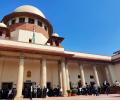
A notice, uploaded on the apex court website, said the bench will hear the matter on October 4.
A three-judge panel appointed by the Supreme Court of India has submitted its inquiry report to the Chief Justice of India on the cash discovery allegations against Allahabad High Court judge Justice Yashwant Varma. The panel, comprising Justice Sheel Nagu, Justice G S Sandhawalia, and Justice Anu Sivaraman, finalized its report on May 3. The report was submitted to the CJI on May 4 for further actions. The controversy was raised following a news report about the cash discovery row after a fire at Justice Varma's residence in Delhi on March 14. The report reportedly contains the findings of the panel into the alleged cash discovery row. Justice Varma has denounced any insinuation and said no cash was ever placed in the storeroom either by him or any of his family members.

A bench of Justices Surya Kant and Joymalya Bagchi is likely to take up the matter in which the EC has justified its ongoing SIR of electoral rolls in Bihar, saying it adds to the purity of the election by "weeding out ineligible persons" from the electoral rolls.
The Supreme Court Monday hinted that it was contemplating referring to a constitution bench for adjudication the Delhi government's petition against the Centre's recent ordinance on control of services.

The Supreme Court on Monday said citizens must know the value of the right of freedom of speech and expression, and exercise self restraint as it mulled guidelines to regulate offensive social media posts.
The petitioner's counsel said his client was facing threats of arrest and torture in his country as he was a former Liberation Tigers of Tamil Eelam member, and that his wife and children had settled in India.

'Digital courts will alleviate congestion in traditional courts.'

Tamil Nadu Chief Minister M K Stalin has welcomed the Supreme Court's ruling that state governors must give assent to bills passed by state assemblies, calling it a 'historic' victory for all state governments in India. The court's decision came after the Governor of Tamil Nadu, R N Ravi, withheld assent to several bills passed by the state legislature. The court found that the governor's actions were in violation of the Indian Constitution, which mandates that governors must act on the advice of the council of ministers. The ruling is seen as a significant step towards strengthening the federal structure of India.

'This case is not a good example of intellectual property strategy for either sector.'

The Supreme Court on Thursday appointed senior advocate Maninder Singh as an amicus curiae to assist it in the matter related to the Board of Control for Cricket in India and fixed the hearing on the plea of the cricket body for amending its constitution concerning tenure of office bearers on July 28.

'If it is not reversed, it will set a dangerous precedent.'

The Supreme Court of India has directed changes in digital know your customer (KYC) guidelines for persons with disability and acid attack survivors, citing the right to digital access as an intrinsic component of the right to life under Article 21 of the Constitution. The court found that existing KYC procedures, which require visual tasks such as head movements and facial positioning, pose significant challenges for these groups, preventing them from accessing essential services like bank accounts and welfare schemes. The court emphasized the importance of bridging the digital divide and ensuring universal accessibility to digital services for all citizens.
President Droupadi Murmu has given her assent to the Waqf (Amendment) Bill, 2025, which has sparked controversy and legal challenges. The Bill, passed by Parliament after heated debates, has been criticized by opposition parties as "anti-Muslim" and "unconstitutional". The government, however, maintains that the reform will benefit the Muslim community. Several petitions have been filed in the Supreme Court challenging the constitutional validity of the Bill, alleging discrimination against Muslims and undermining their religious autonomy. The Bill repeals the Mussalman Wakf Act, 1923, and introduces restrictions on Waqf properties and their management, which have raised concerns about the impact on the Muslim community.
The Supreme Court has begun hearing petitions challenging the Election Commission's decision to conduct a special intensive revision exercise in Bihar ahead of elections, raising concerns about voter exclusion.
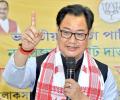
Justice Sodhi said the right to frame laws lies with Parliament.

The Supreme Court today warned three top BCCI office bearers of serious consequences if they do not give suggestions on the cash-rich cricket body's draft constitution, in accordance with its judgement.

The Supreme Court of India has ruled that maternity leave is a fundamental right and cannot be denied to a woman based on the number of children she has from previous relationships. The court overturned a Madras High Court decision that had denied maternity leave to a Tamil Nadu government school teacher who had two children from a previous marriage. The Supreme Court emphasized the importance of reproductive rights, including maternity benefits, as part of international human rights law. The court also highlighted the right to life under Article 21 of the Indian Constitution, which includes the right to health, dignity, and reproductive choice. The decision has significant implications for women's rights and reproductive healthcare in India.
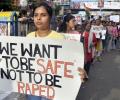
'The Supreme Court should take serious note of it. Such a ruling has no place in a civilized society'
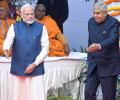
The RSS which catapulted Jagdeep Dhankar to national prominence after 21 years of hibernation could not come to his rescue when BJP higher ups decided to seek his resignation, points out Prakash Bhandari.

The Supreme Court has directed the Election Commission to provide details regarding the approximately 65 lakh voters removed from the draft electoral rolls in Bihar, a state preparing for elections. The court's order comes in response to a petition filed by an NGO challenging the Election Commission's Special Intensive Revision of electoral rolls.
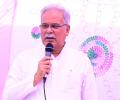
The Supreme Court declined to examine a plea challenging a PMLA provision, stating the issue lies in the law's abuse, not the law itself. The court allowed the petitioner to approach the High Court if procedures weren't followed.
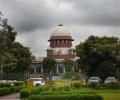
The Supreme Court of India will likely hear a batch of petitions challenging the constitutional validity of the Waqf (Amendment) Act, 2025 on April 15. The Act, which came into force on April 8, has been met with widespread criticism from various stakeholders, including politicians, the All India Muslim Personal Law Board (AIMPLB), and Jamiat Ulama-i-Hind. They argue that the law is discriminatory and violates the fundamental rights guaranteed under Articles 25 and 26 of the Constitution. The petitions allege that the amendments give the government more control over the administration of Waqf, effectively sidelining the Muslim minority from managing their own religious endowments.

"Considering the importance of the matter, subject to the order of the Chief Justice of India, the matter be placed for final hearing on July 22," the bench said.

The matter would be heard by Chief Justice B R Gavai and Justice Augustine George Masih.

Supreme Court judge, Justice B R Gavai, expressed hope that the "current difficult phase" in ethnic strife-torn Manipur will be over soon with the assistance of the executive, legislature and judiciary and the state will prosper like the rest of the country. Justice Gavai, who led a delegation of Supreme Court judges that visited Manipur, called upon the people of the state to work together to restore peace and harmony. He also urged the people of the state to work together to restore peace and normalcy, and lauded the natural beauty he witnessed while travelling from Imphal to Churachandpur. He expressed delight in noting that training programmes were being imparted at the relief camps, and thanked the Chief Justice of Manipur High Court and the district legal services authority for their efforts. Justice Gavai also stressed the need for readmission of students who had to drop out of school due to the conflict and called upon the educational institutions and the public to ensure all students complete their education.
A video and inquiry report have raised questions about the Delhi Fire Services' claim that no cash was found at the official residence of Delhi High Court judge Justice Yashwant Varma during a fire incident on March 14. The video, which has gone viral on social media, shows fire fighters dousing flames on articles that appear to include half-burnt Indian currency notes. The Delhi High Court Chief Justice has initiated an in-house inquiry against Justice Varma and the Supreme Court has proposed his transfer to the Allahabad High Court.

The Maharashtra legislative assembly passed the 'Maharashtra Special Public Security Bill' aimed at preventing unlawful activities of Left Wing Extremist organizations, focusing on urban Naxalism and passive militancy.
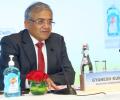
Congress general secretary K C Venugopal said in a hasty midnight move, the government has notified the appointment of the new CEC.

The government rejected the Opposition's demand for a discussion on electoral roll revision in Bihar, citing that the matter is sub judice and pending before the judiciary.
The Supreme Court of India has ruled that governors cannot indefinitely delay giving assent to bills passed by state legislatures, setting a timeline of one to three months for their actions. The court said the governor must act "as soon as possible" and that failure to comply with the timeline will make their inaction subject to judicial review. The ruling comes as several opposition-ruled states have accused governors of delaying assent to bills passed by their assemblies.

The Economic Advisory Council to the Prime Minister, of which he is chairman, has quickly sought to distance itself and the government from Dr Debroy's views.
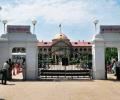
The Allahabad High Court Bar Association has opposed the transfer of Delhi High Court sitting judge Justice Yashwant Varma, from whose official home a huge stash of cash was reportedly discovered. The association said that the Supreme Court's decision to transfer Justice Varma back to the Allahabad High Court was "taken aback".

"The entire nation was in shame due to the comments... We saw your videos , you were on the verge of using very filthy language but somehow better sense prevailed or you did not find suitable words. You should be shameful. Entire country is proud of our Army and you made this statement," Justice Surya Kant said.

The CJI also dealt with the principle of affirmative action by the state and said it was meant to achieve broader equality and was not against the right to equality.

The judges were inside the official residence of Justice Varma for around 30-35 minutes and apparently inspected the site, sources said.
